
Returning

Daily Compass returns after a prolonged period necessary for healing. It is a stretch, a reach, a challenge to move forward into the future while staying connected to our daily meditation tradition.

Tell us about a time you’ve returned to something after an absence. How did it feel? What was difficult about it?

Healing (and Hiatus)

In August, we will explore healing–the ways in which our bodies, minds, and souls heal from wounds and damage, and the ways in which the healing of the self and the healing of our world are connected.

Daily Compass will be taking a brief hiatus so that our curator can focus on healing themselves and their family from COVID-19. We hope to be back to daily meditations shortly. In the meantime, we hope that you will interact with us and with each other by responding to this:

Tell us about a time that you have experienced healing.

Love Your Enemies

“You may, with good reason, feel deep anger toward the enemy. This is the starting point from which you have to work, so acknowledge your hatred. Take note of your profound reluctance to turn this enemy into a friend. Remember that we can become twinned with an enemy and come to resemble that person. Our hatred may become an alter ego, a part of our identity. Try to wish for your enemy’s well-being and happiness; try to develop a sense of responsibility for your enemy’s pain. This is the supreme test of compassion. At first it may seem impossible.” -Karen Armstrong

Send lovingkindness thoughts to someone who has angered you. Start small and let your love grow.

Our Principles

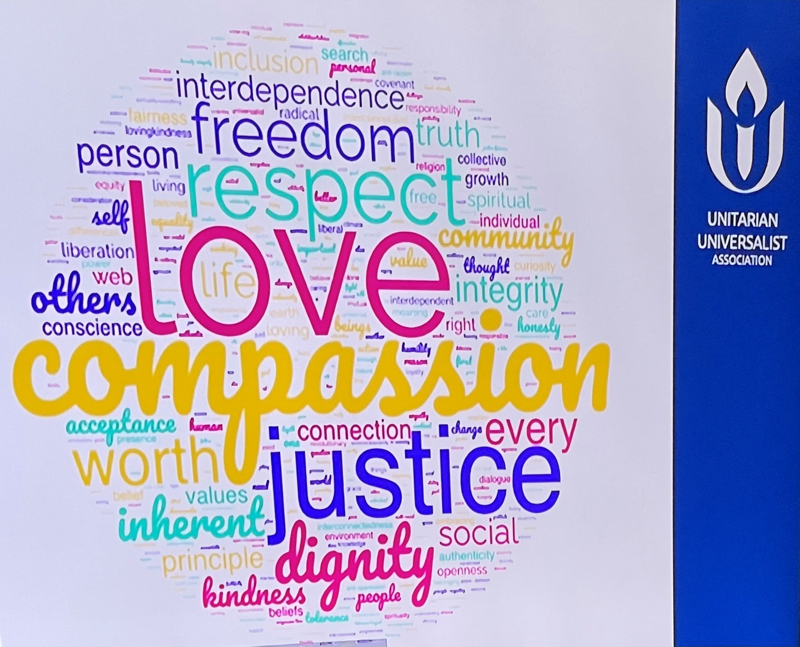
The commission studying the living principles of our Unitarian Universalist Association asked individual UUs to name the values they wanted our principles to uphold. They made a word cloud from the responses. Notice how big “love” and “compassion” are.

What would a religion that truly centered love and compassion be like?

We

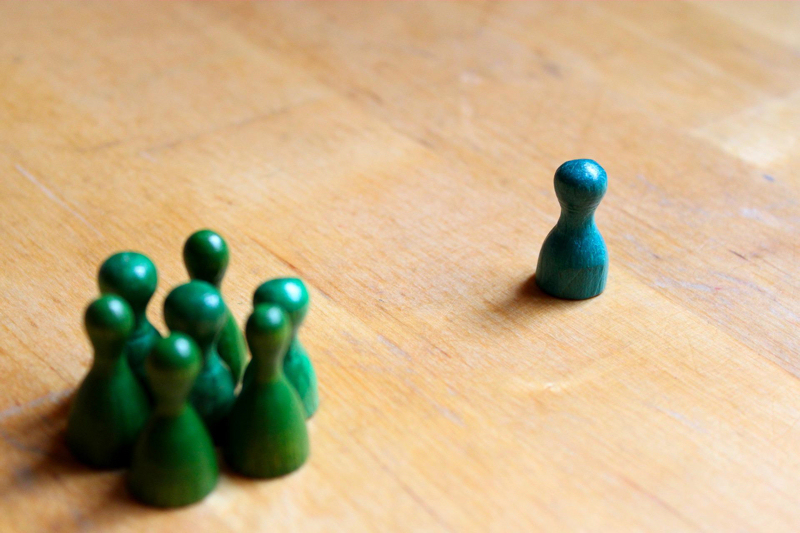
Too often, people use the word “we” in a way that leaves some people out. Part of the journey of compassion is working on eliminating the barriers between “us” and “them,” but this also requires us to be honest about who we mean when we say “we” and working towards meaning everyone.

Who do you mean when you say “we?”